Chem-E Car Electrical System
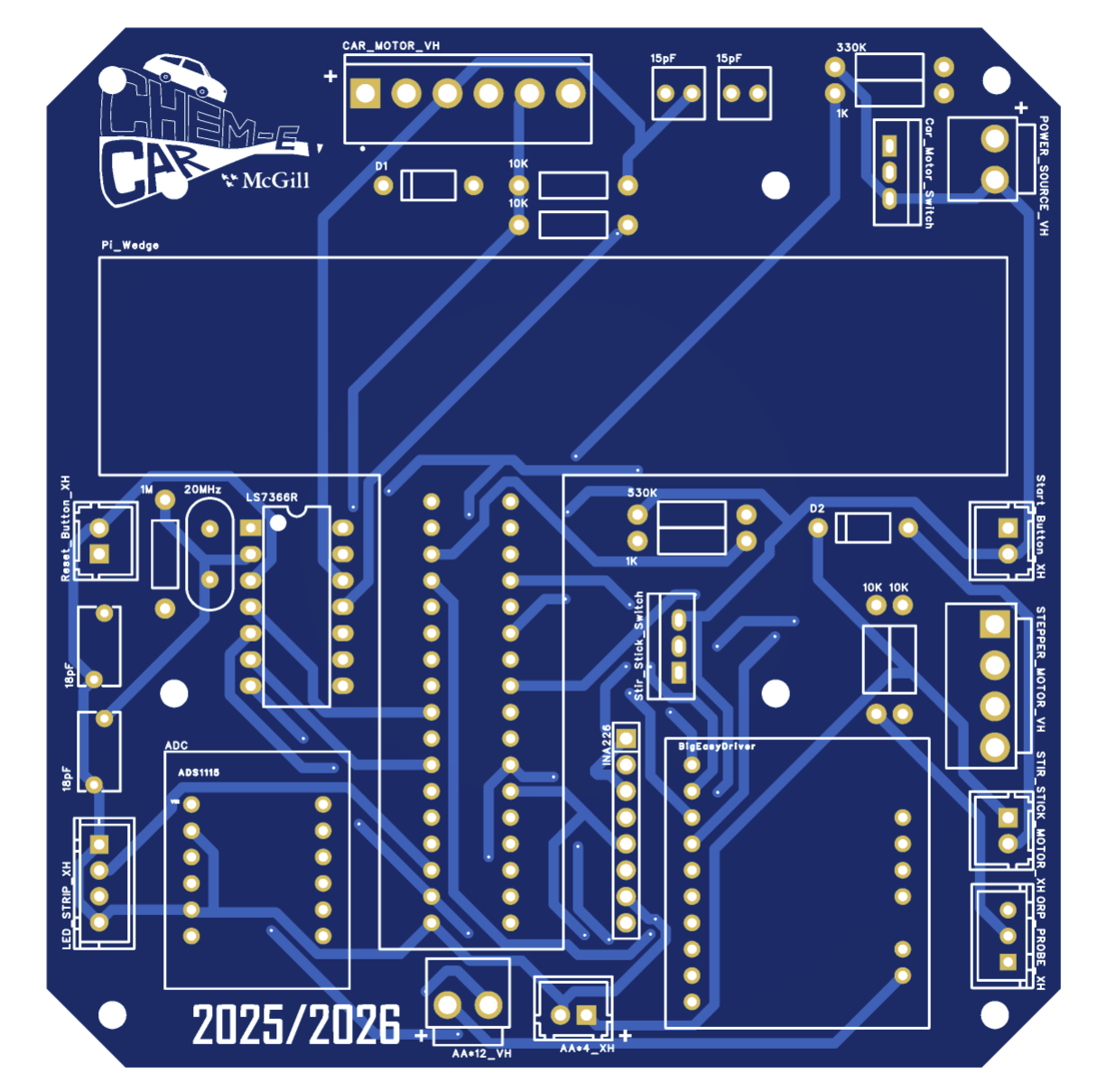
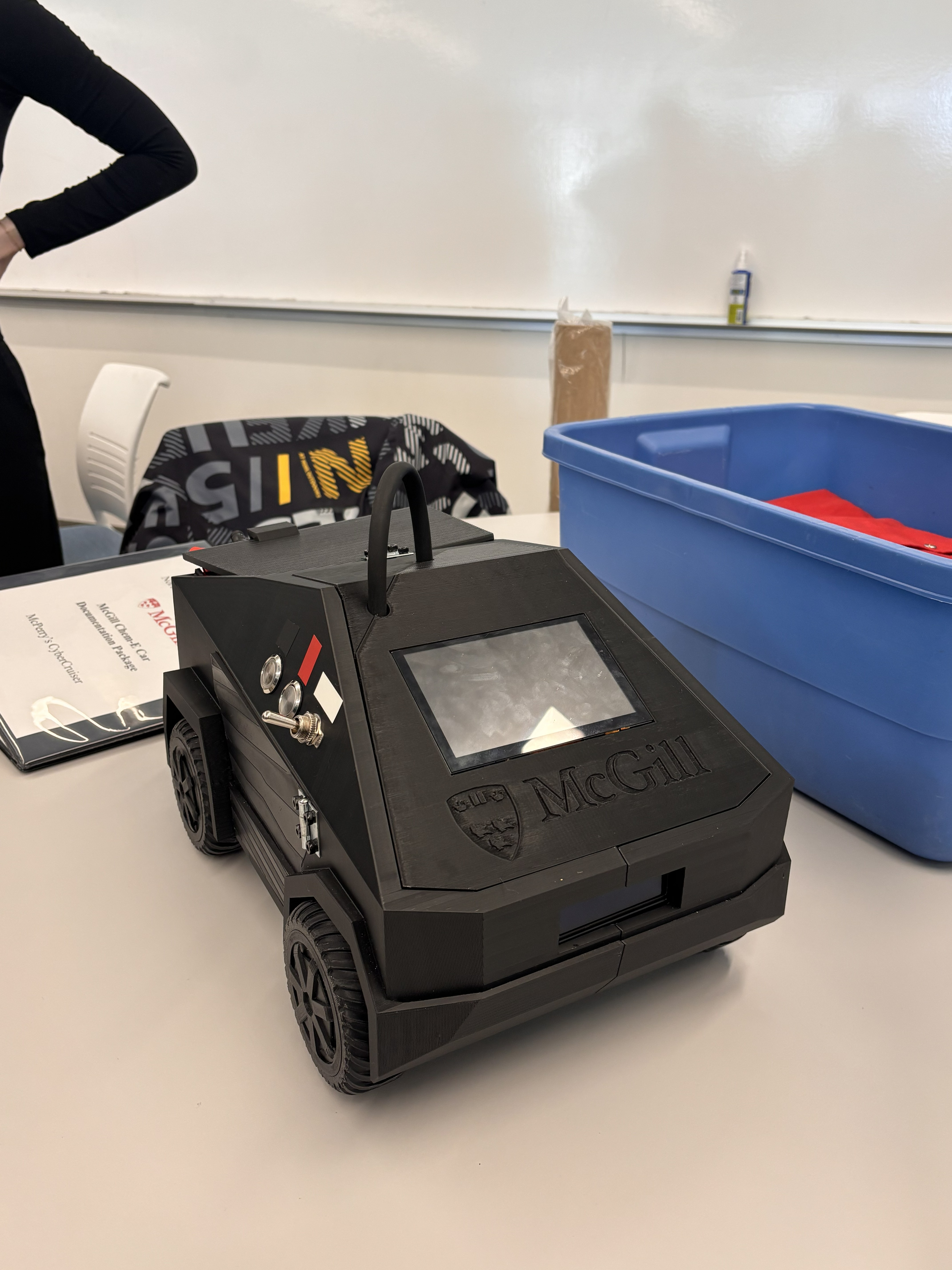
I lead the design of the full electrical stack for a shoebox-sized Chem-E Car powered entirely by chemical reactions. The system includes custom PCBs for power regulation, motor control, management of our homemade battery, and sensor interfaces that monitor reaction and car movement to precisely stop the car at the target line.
Gallery
Description
This year, the hardare design includes the PCBs, wiring, and sensors that drive the two motors, read the
car’s speed, monitor the battery’s voltage and current, record live camera data, and measure the oxidation reduction
potential (ORP) of our stopping reaction. The design of this system invloves Spice modelling, and tons of iterative prototyping to
ensure steady power distribution from our homemade battery, and low-noise high integrity signal reading and writing to motors and sensors.
On the software side, using SPI and I²C comms, we write the embedded code that collects data from all sensors and writes to all outputs.
Using the live measurements, we model battery behaviour to estimate state of charge,
and use both the ORP and image data to build a stopping algorithm. This brings the whole car together!
While the end goal stays constant year to year, the change in battery chemistry, mechanical design, stopping reaction, and increased ambition
of the team proves to be electrically challenging in a new way each competition. From an electrical standpoint--this being a competition where precision
is everything--I try to push my design each year to build a more measured, mathematical, and robust car.